Renting a riad in the Marrakech medina: what to know before you book
A riad is not a hotel with a courtyard in the middle. It is a house that faces inwards, blank to the street, built around a square of open sky. That one architectural decision explains most of what people love about staying in one, and most of what catches them out on the first night. The rest comes down to the address and to whoever opens the door.
See houses to rent in Marrakech
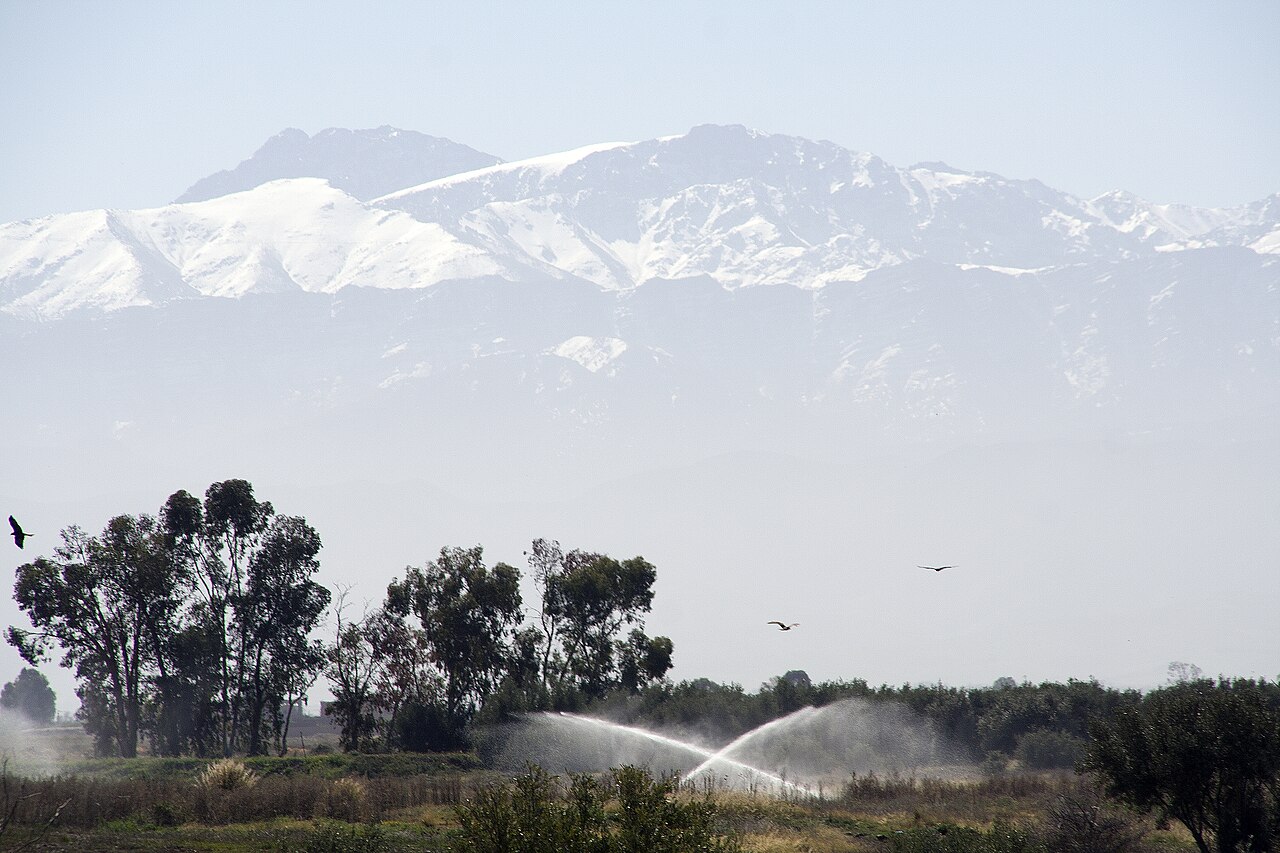
A house that turns its back on the street
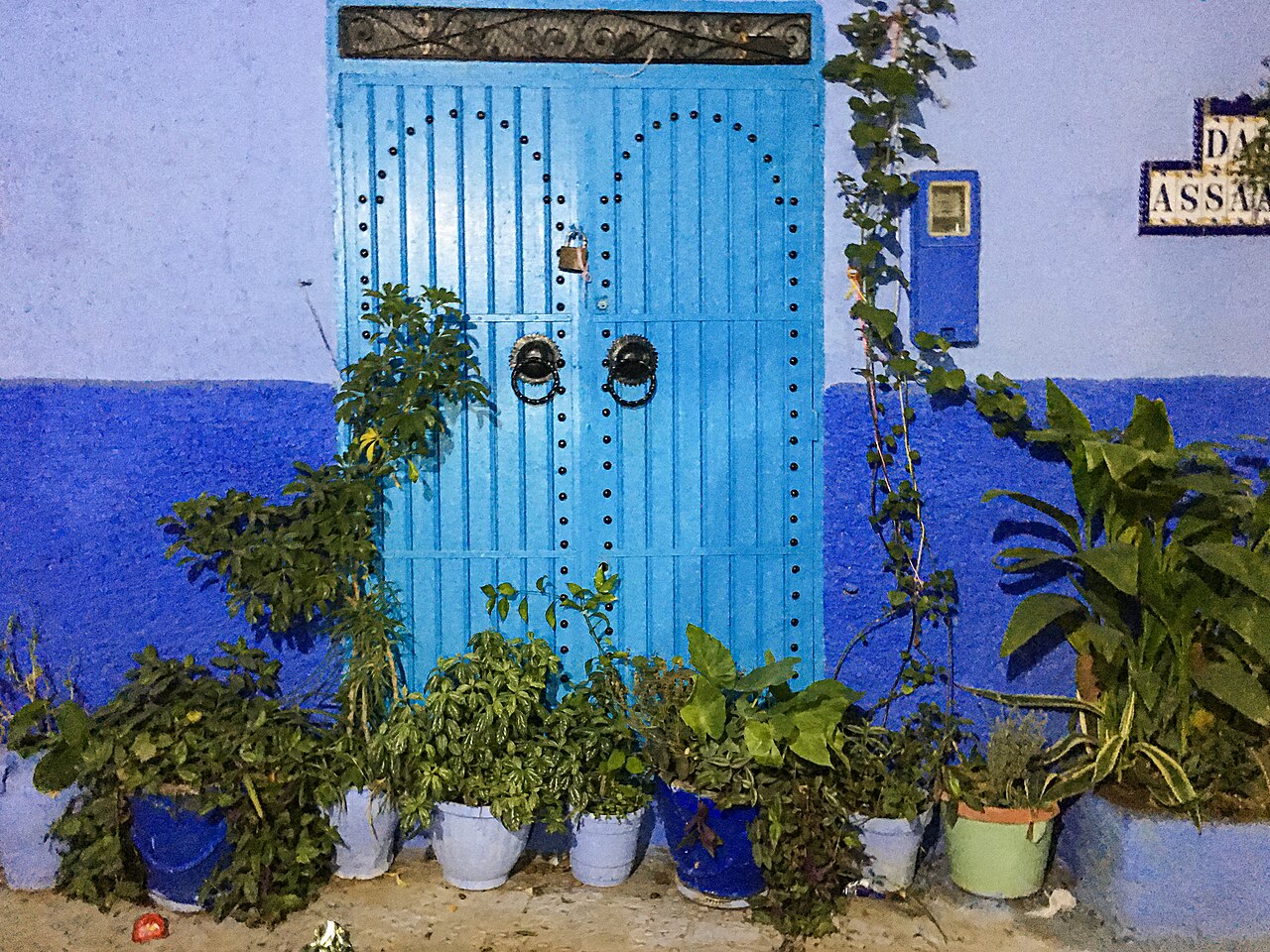
From the derb you see nothing. A rendered wall, a studded door, perhaps a knocker. Every window worth having looks into the courtyard, which is why the house stays cool in summer: hot air climbs and leaves through the opening above. It is also why a ground-floor bedroom can be dim at noon.
The courtyard is a sounding box as well. A conversation under the orange tree at eleven at night reaches every room in the house at roughly the same volume. Light sleepers should ask for a room high up and away from the stairs. In a group the logic reverses: the courtyard becomes the shared sitting room, and that is the whole point.
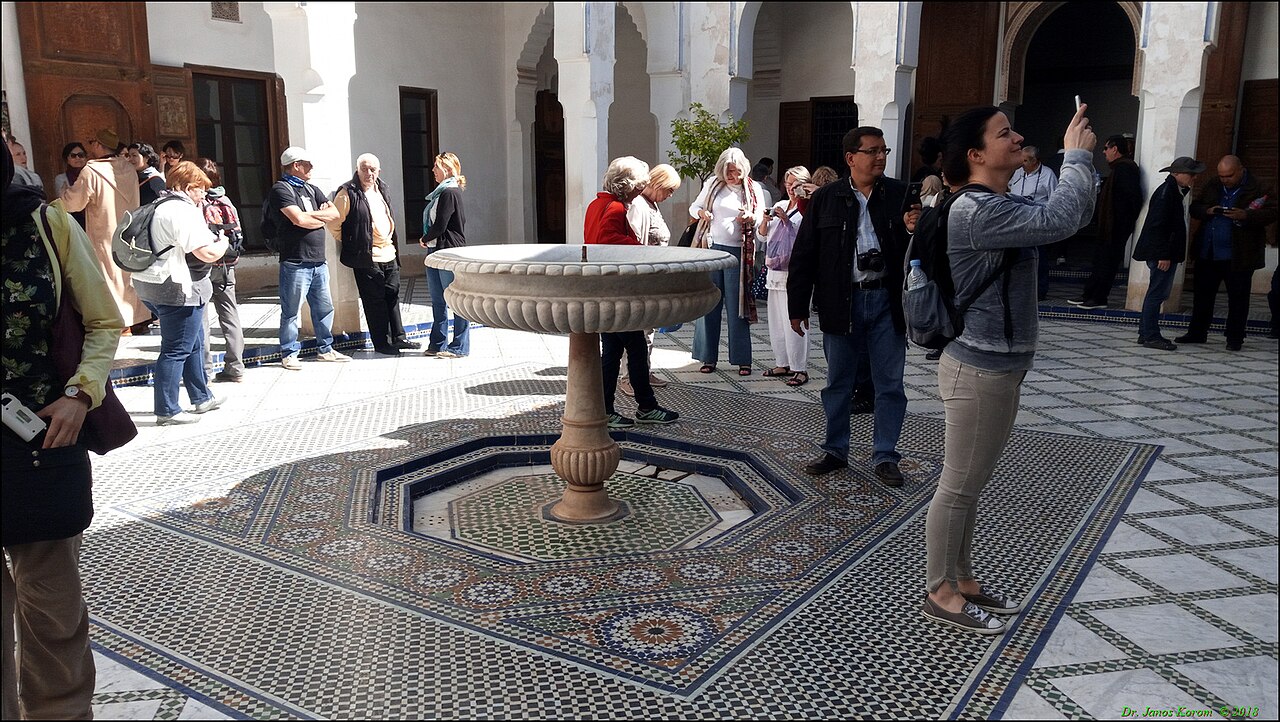
The courtyard is the cooling, until January undoes it
In July and August the building outperforms a badly fitted air conditioning unit. You live downstairs, in the shade the house casts on itself, and the roof terrace only becomes usable again once the sun drops. A terrace photographed in full glare tells you nothing about what it is worth at three in the afternoon.
From December to February the problem turns over. Thick walls with no heating are cold at first light, even when it is pleasant outside by midday. So do not ask whether the riad has heating. Ask how the room you will sleep in is heated. And remember the courtyard is open to the sky, so spring showers land inside it.
The courtyard is the best thing about the house in August and its weak point in January.
The whole house, or a room with the owners in it
Taking the riad entire gives you the courtyard, the kitchen and the terrace, and lets you set the timetable: breakfast at eleven, dinner upstairs, coming home late without meeting anyone. For a family or a group of friends the per-person figure drops below a decent hotel fairly quickly.
A room in a house where the owners live is a different proposition. Breakfast under the courtyard, advice from people who actually live there, and someone who answers when the lock refuses to turn. In exchange, shared life keeps its own hours. If you are taking a small riad whole, look hard at the kitchen: a real oven, how the hot water works, whether cleaning is included.
Your derb matters as much as your neighbourhood
The medina is not one uniform place. Around Jemaa el-Fna everything is walkable and nothing ever stops: handcarts over the cobbles, scooters, groups coming back at two in the morning. Towards the Mellah or the Kasbah you sleep better and walk five minutes further.
North, towards Bab Doukkala or Dar el Bacha, the streets widen and a taxi gets much closer to the door, which stops being a detail the moment you have luggage. But the derb weighs as much as the district. Two houses that share a wall do not have the same night, depending on whether the lane feeds the souk or dead-ends.
Five things worth getting in writing before you pay anything:
- The name of the derb and where the taxi will drop you.
- How many minutes on foot from there, steps and slope included.
- Whether the lane is lit after dark.
- Whether there is guarded parking nearby, and how far it is.
- Whether someone can meet you where the car stops.
What listing photographs leave out
The stairs. Plenty of them, steep, sometimes without a handrail, faced in zellige that is slippery in socks. None of that matters if you walk well and travel light. It matters a great deal with a hard-shell suitcase or a bad knee. Say so when you book and you will get the downstairs room, which nearly every house has.
The medina is permanently being restored, and building work next door carries because the courtyards all open onto the same sky. A bathroom described as private can sit across the courtyard, and the hot water may come from a tank shared by two bedrooms: the third shower of the morning is a cold one.
Add Wi-Fi, which does not travel through forty centimetres of wall, and wooden doors that swell after three days of rain. None of this argues against an old house; it is what makes it an old house. It only stings when you find out on the first night.
Arrival, your passport and the tourist tax
The taxi stops at the nearest street a car can use and the last stretch is done on foot, over uneven cobbles. It is not far, but with bags it feels far. Many riads send someone with a handcart if you give them notice. The classic mistake is arriving after dark without telling anyone what time to expect you.
The paperwork starts on the doorstep and there is very little of it. Your passport is taken for the house register. The tourist tax is settled there, per person per night, and the amount depends on the commune, so ask for it in writing if your budget is tight. Ask how payment works too: in small houses, cash is still the norm.
Three messages beat thirty photographs
A riad is better rented after a conversation than after an album. Ask for a short phone video walking from the drivable street to the front door, the earliest hour you can get in, and what is provided: sheets, towels, soap, coffee in the morning. An owner who answers those three precisely is almost always a good host.
Settle cancellation, cleaning and the deposit before you book, because none of it is a pleasant conversation to have standing in a lane holding your bags. On Dwirat every listing opens a direct conversation with the person renting it out.
Can a car reach the front door?
Rarely, so plan on the assumption that it cannot. The car stops at the nearest drivable street and the derb is walked. Many houses send someone with a handcart for the bags if you give them your arrival time.
Does a riad work with young children?
It does, and the courtyard is usually the best part of the house for them. Check two things first: the height of the railings around the courtyard and terrace, and the depth of the basin if there is one.
Do we need the whole house to get any peace?
No. A riad with four or five rooms is quiet by design, because the building itself caps the number of guests. What loses the intimacy is the very large house converted into a guesthouse, with people crossing the courtyard all day.
Which months are best for staying in a riad?
Spring and autumn: warm days, mild nights, a terrace you can use from morning until late. In summer the house shelters you well but the terrace only earns its keep at sunset. In winter it all depends on the heating.
What do we need to hand over at check-in?
Your passport, taken for the house register, and change for the tourist tax, which is charged per person per night. The commune sets the amount and it changes over time, so have the owner confirm it before you book.