Holiday rental in Chefchaouen: sleeping in the blue, or sleeping down the hill
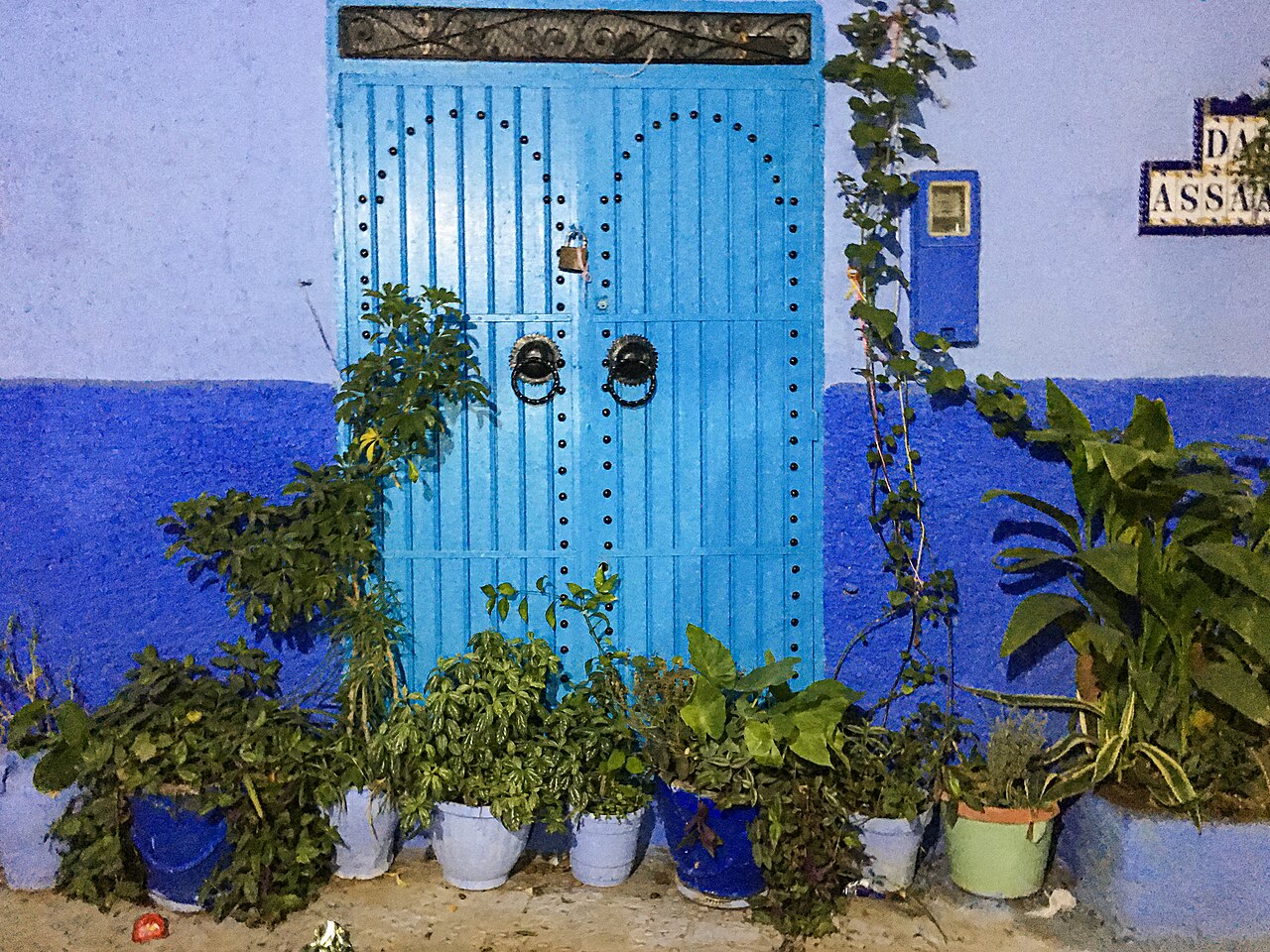
Chefchaouen is a mountain town built on a slope, and that single fact settles most of your decisions. The postcard is at the top, in the blue medina, where no car can follow you. The convenience is at the bottom, around Avenue Hassan II, where a taxi pulls up at the door. In between, stairs.
See places to stay in Chefchaouen
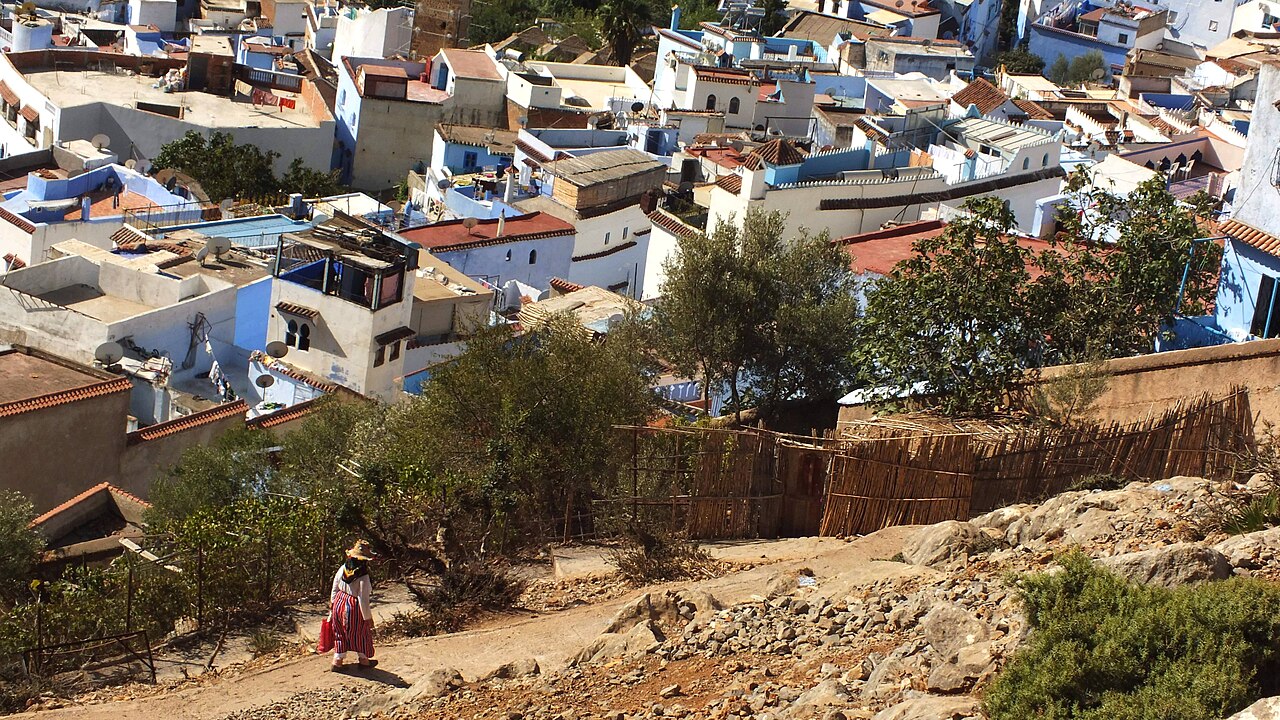
The blue medina, and the stairs nobody photographs
Sleeping inside the walls buys you one thing a day trip never can: the early hours. Between nine and five, Outa el-Hammam square fills up and you queue, politely, for your turn at a blue doorway. At seven there are cats, a man sluicing water over the cobbles and bread coming out of the oven.
The rest is paid in your legs. The lanes are stepped, paved with rounded river stones that turn slick the moment it rains, cars stop at the old gates — Bab el-Ain, Bab Souk, Bab Onsar — and from there it is a five to ten minute climb. Wheeled luggage does not roll on stairs. It gets carried, which is why the porters with handcarts at Bab el-Ain earn their tip.
Arriving after dark is worse: the lighting is thin and your phone loses the plot between walls three metres high. Ask which gate to aim for and how many steps follow.
Down by Hassan II, where the taxi reaches the door
Around Avenue Hassan II the town turns ordinary, and ordinary has its uses. Flats are bigger, newer and noticeably cheaper for the same comfort. You park at the foot of the building, there are supermarkets and taxis at any hour, and the medina is a ten minute walk: uphill going, downhill coming back, which matters at eleven at night.
What you give up is atmosphere — concrete, car horns, streets that stay loud late near the main roads and the bus station. There is a middle option few look for: the buildings tucked just below the ramparts, where a car gets almost to the door, a gate is two minutes away and the windows face the blue roofs and the Rif.
What an old house gives you, and what breaks in it
Medina houses are built around a courtyard, with thick walls and almost nothing opening onto the lane. In July that produces a coolness no badly fitted air conditioner will match. In January the same walls work against you: with no heating it is colder indoors than outside in the sun on your own terrace.
In August the house looks after you. In January you look after yourself, with blankets.
Hot water usually comes from a gas heater in the kitchen, which needs a flame and a bottle behind it and turns cold the moment a second tap opens. Wooden doors swell after three days of rain, and Wi-Fi will not travel through forty centimetres of old wall. None of that argues against an old house; it only stings if you find out on the first night.
The right month, and the one people regret
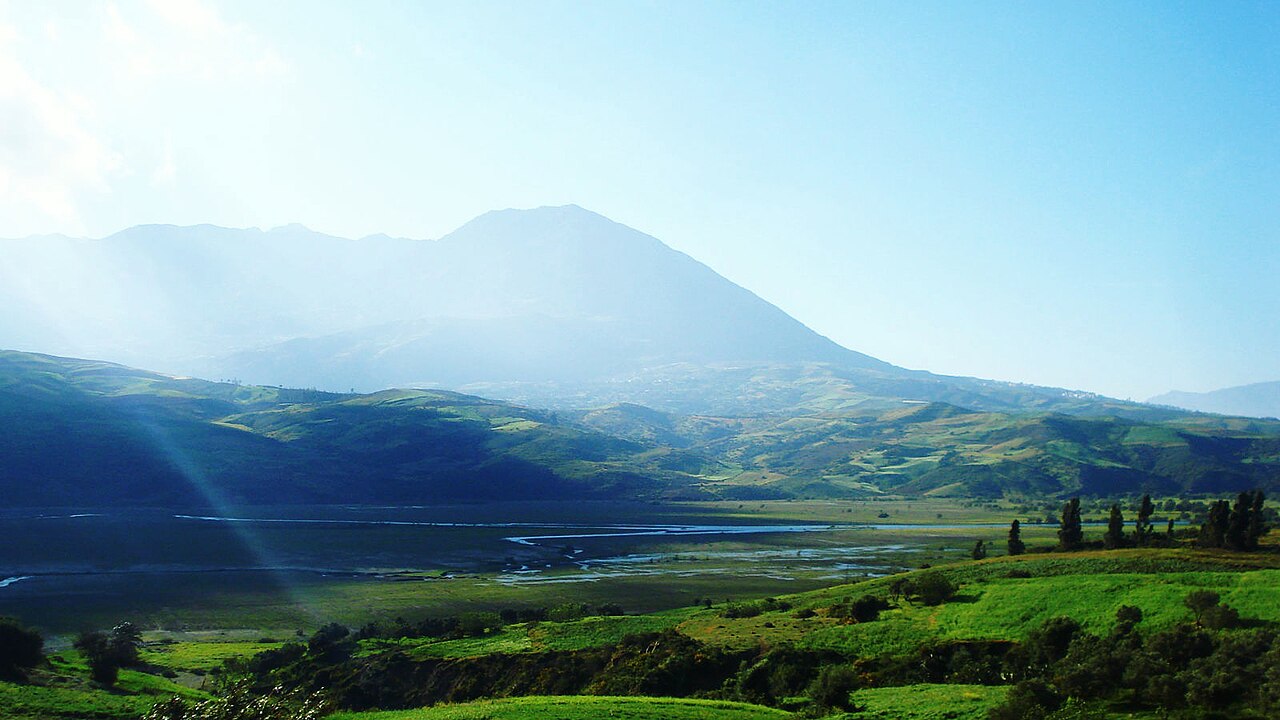
Spring and autumn are the answer, and it is not a close call. The days are clear, the hills are green, and the trails towards Akchour and the God’s Bridge can be walked before the heat turns them into an ordeal. By late summer the waterfalls thin out and the landscape stops matching the photographs that brought you here.
Summer has one real advantage: at this altitude the air is breathable in a way Fez and Marrakech are not, which is why half the country comes up the mountain in August and the square stays busy past midnight. Winter is the other extreme — days of rain, fog over the view you came for, empty lanes, prices that fall hard. Either way, ask how the place is heated. A brazier is not heating.
Questions worth asking before you pay
Listing photographs rarely lie, but nearly all were taken in summer, on a wide lens, from the roof terrace, and show none of the staircase, the cold or the plumbing. Ask the host for a short phone video from the gate to the front door. A serious owner sends it without fuss.
- Which gate to arrive at, and how many steps follow.
- How the place is heated, and how many blankets are in the cupboard.
- How the hot water works: gas, electric, or a bottle to swap.
- Whether the roof terrace is yours or shared with neighbours.
- What sits under the window: a mosque, a late café, a taxi rank.
One thing catches travellers out at check-in: the municipal tourist tax. It is settled on the spot, almost never included in the price you saw online, and varies with the commune and the property’s classification, so ask for the figure in writing. Keep your passport handy too: the owner has to record guests’ details in order to declare them.
Two nights or four, and what moves the price
Two nights are enough to see the town without rushing: one late afternoon for the Spanish mosque, timed so the sun is dropping onto the blue roofs, and one full morning for the lanes, the kasbah and Ras el-Maa, where women still do the laundry in water off the mountain. Three or four buy you Akchour and the God’s Bridge, a whole day on its own.
On money, ignore the headline figure and learn what moves it. Pushing it up: a terrace with a view, an extra bedroom, a long weekend, Eid, booking three days before you land. Pulling it down: a Tuesday in February, a full week instead of two loose nights, and giving the host your dates and party size in the first message rather than the fifth.
Can I drive right up to the door?
In the lower town, yes. In the medina, no: vehicles stop outside, usually in a paid guarded car park near a gate, and you walk the last stretch.
Is it manageable with limited mobility?
The medina, barely: almost everything is narrow cobbled steps and no vehicle gets in. The lower town is far more workable, so search there and confirm the lift exists and runs.
Do I really need heating?
From October to April, yes, and ask in plain words because plenty of listings never mention it. An old house holds the cold after dark even when the terrace has been in full sun.
Where should light sleepers avoid?
Anything overlooking Outa el-Hammam square in summer, and down below, the streets right beside the bus station. A room facing the courtyard changes the night completely.