Sleeping in the desert at Merzouga: one night in the dunes, two in the village
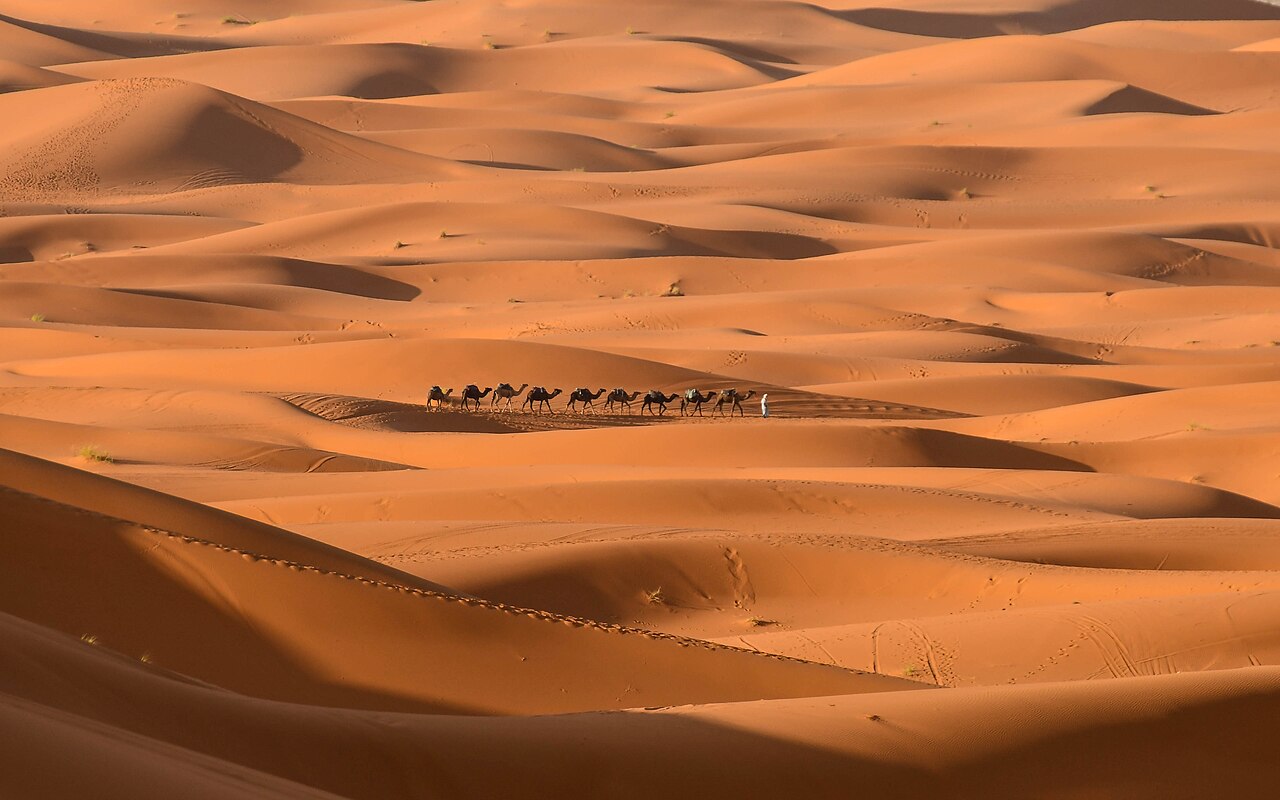
Two nights at Merzouga have almost nothing in common. Out in the Erg Chebbi there is no street lamp and no engine, and you can hear the sand move. Back in the village there is hot water and your car outside the door. Getting this right is a question of order, not of choosing.
See places to stay in Merzouga
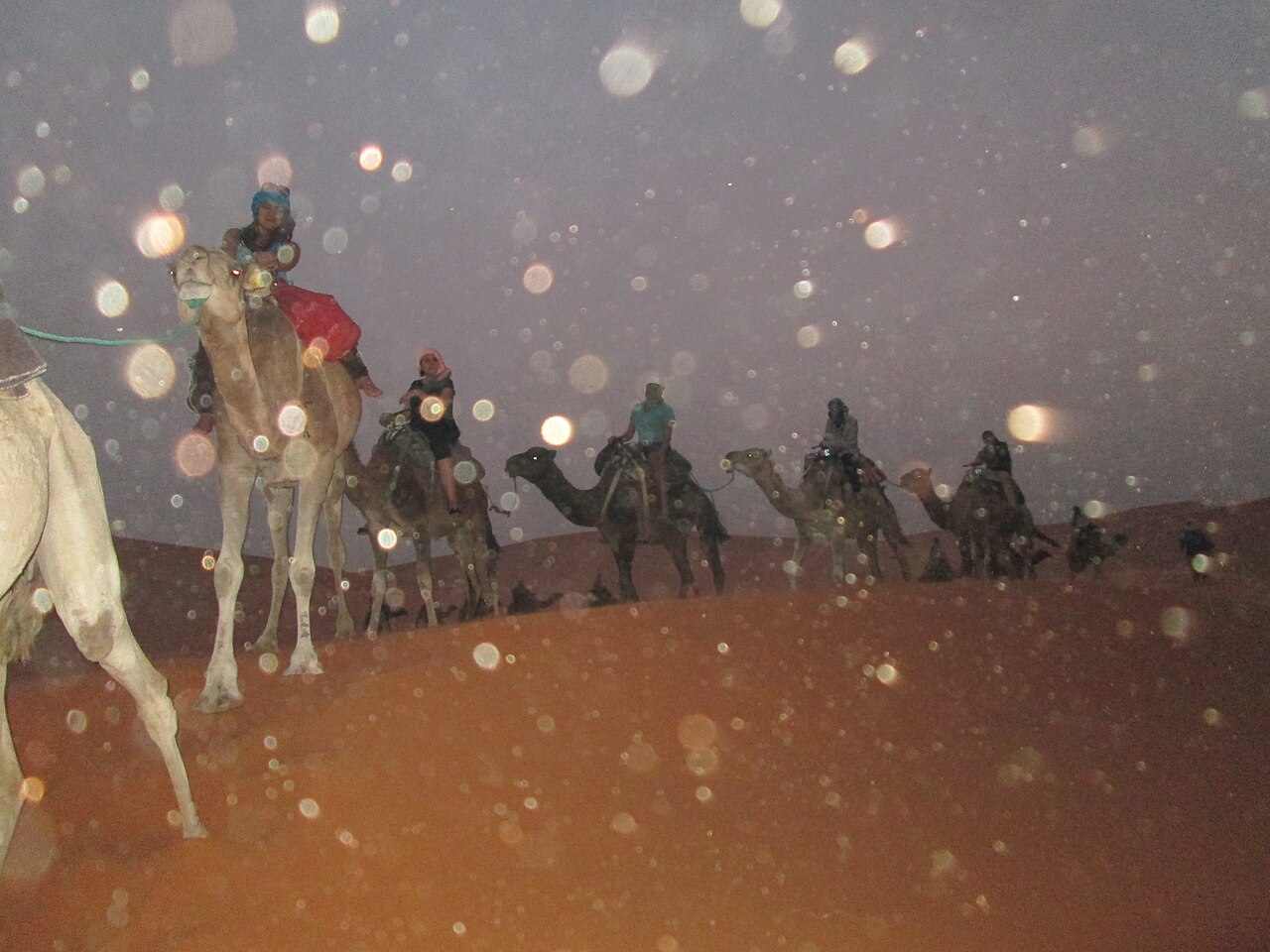
The camp: what you get, and what it costs you
You leave for the camps an hour before sunset, on a dromedary or in a 4x4. That hour is not a suggestion: half an hour late and you arrive in the dark. Reckon on ninety minutes in a hard saddle.
What you get up there is hard to buy anywhere else — real silence, a sky with no light pollution, first light along a crest. What you give up is comfort: basic washing, a generator for a few hours after dark, sand in your teeth.
One night suits most people. Two if you came to photograph the place, or to walk out at dawn across crests nobody has touched. Beyond that it drags: between ten in the morning and five in the afternoon nobody leaves the tent.
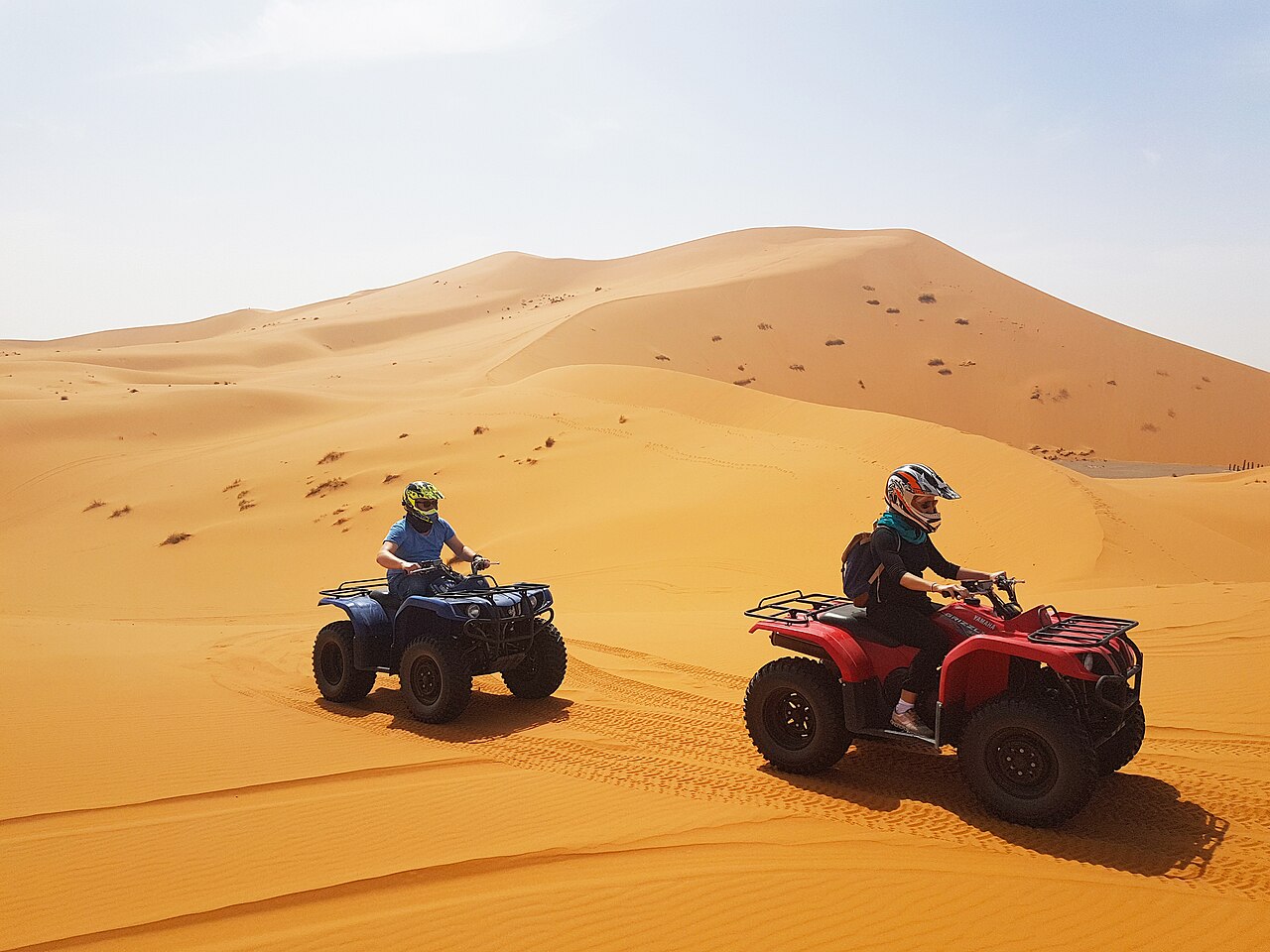
Merzouga and Hassi Labied: the base you sleep either side of
Merzouga and Hassi Labied, the hamlet next door, line up houses and flats at the foot of the erg. You sleep there before the camp and after it, and you leave the car there. The shower that matters is the one on the way back.
Plenty have a terrace facing east, straight at the dunes, so the sunrise is nearly the same one without a five o’clock alarm — usually the sensible answer with small children or grandparents in the party.
The village charges you in noise. The 4x4s start up early, the quad bikes circle all afternoon, and a house on the main track is a different night from one two lanes back. In the photos, look at what sits outside the front door.
The month settles more than the address
October to April is the window. Days mild to hot, nights cool to cold, and in January it freezes before dawn: frost on the windscreen, a short drive from the Sahara. May and September still work, and cost less.
June to August runs to 45 degrees in the shade, and there is no shade — a good many camps shut. Spring lifts sand easily, and a windy afternoon cancels the outing. Ask what happens to the money then, because the answer varies house by house.
What goes up the dune, and what stays behind
The usual mistake is not forgetting sun cream. It is packing for a hot country, then working out at two in the morning that midday and dawn sit twenty degrees apart. Camp blankets are counted out, and there is not always a spare.
- A proper warm jacket, even in late October, and dry socks to sleep in.
- A head torch: there is no lighting at all out in the dunes.
- Something to seal the camera, because sand gets in through the zoom ring.
- Cash in small notes, since cards get you nowhere in the village.
- A long scarf, for the wind and as padding on the dromedary.
Everything else stays behind. A wheeled suitcase does not roll on sand, nobody is carrying it up to the tent, and the animal takes very little. Split the luggage the night before, not ten minutes before the caravan leaves.
Village, dunes, village: the order that works
The pattern that works fits into three nights: village on arrival, camp, village on the way back. The first looks unnecessary and is not. From Fez or Marrakech the drive is eight to ten hours, and rolling in at four to head out at five wastes the best evening.
The last night is for washing, shaking out your clothes and sleeping without sand down your collar. Skip it and you stack a short night on a long drive, and that tiredness arrives all at once past Erfoud.
Five things to ask before you pay
A host who answers five questions precisely spares you nearly every unpleasant surprise. One who answers “don’t worry” to all five is promising you at least one.
- Who meets you, and at what time, if you arrive after dark.
- When the caravan leaves, and what happens if you miss it.
- What the price covers: dinner, breakfast, transfer, water, blankets.
- Where the car sits overnight, and who answers for it.
- Whether there is hot water on your return, and from what hour.
Ask for it in writing, without making a ceremony of it. It is not distrust: it is what settles the day two people remember two versions of the same conversation.
What disappoints people, and how to dodge it
The “luxury” camp is usually a canvas tent with a real bed and a good rug in it. For somewhere with no road that is a great deal of effort; for anyone expecting a hotel with fabric walls, it is not. Look at the photographs of the bathrooms.
The other one is the first crest, ten minutes out of the village. In high season it is a railway platform: footprints everywhere and a queue for the same photograph. Walk twenty minutes south and you have it to yourself.
What pushes the bill up is high season, group size and how far out the camp sits. Transfer, dinner, a guide and the dromedary add up fast when none of it was agreed back in the village.
Does it work with children?
From about five or six, yes, provided you bring genuinely warm clothes and accept basic washing. The camel ride swaps for a 4x4, which solves it for younger ones and anyone with a bad back.
Is there signal and power out in the dunes?
Signal comes and goes, and disappears the moment a dune gets in the way. The generator runs a few hours in the evening and then stops, so charge the phone, the camera and a power bank in the village.
Merzouga or Hassi Labied?
For the dunes it makes no difference; they start a few hundred metres from both. Merzouga has the shops and the movement, Hassi Labied is quieter. Light sleepers should take the second.
Do I need a 4x4 to reach the village?
No. Tarmac reaches both villages and an ordinary car is fine. The 4x4 is only for the tracks out to the camps, and your host arranges that leg. Do not take your own car onto the sand.