Where to stay in Taghazout for surfing: neighbourhoods, seasons and budget
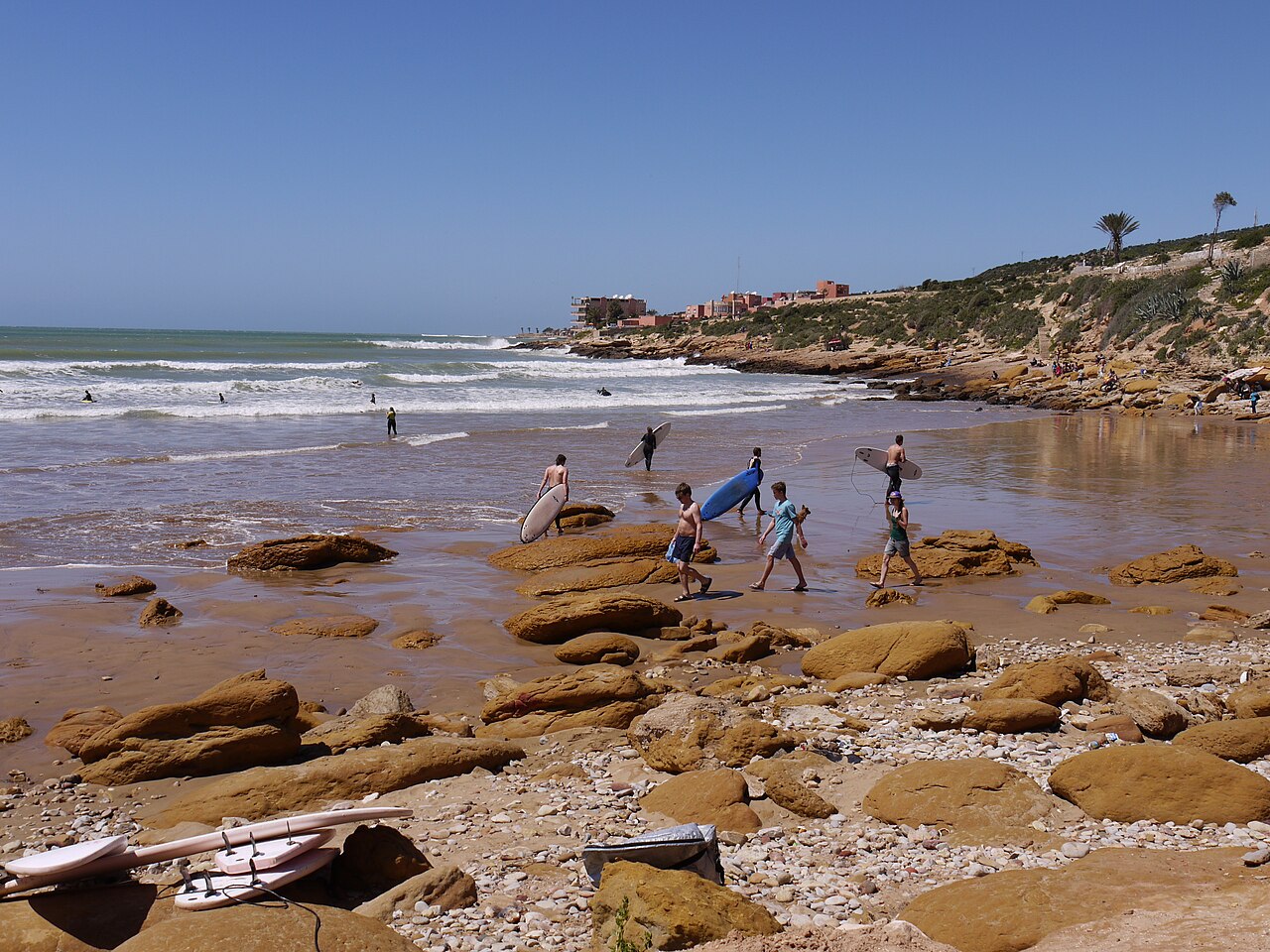
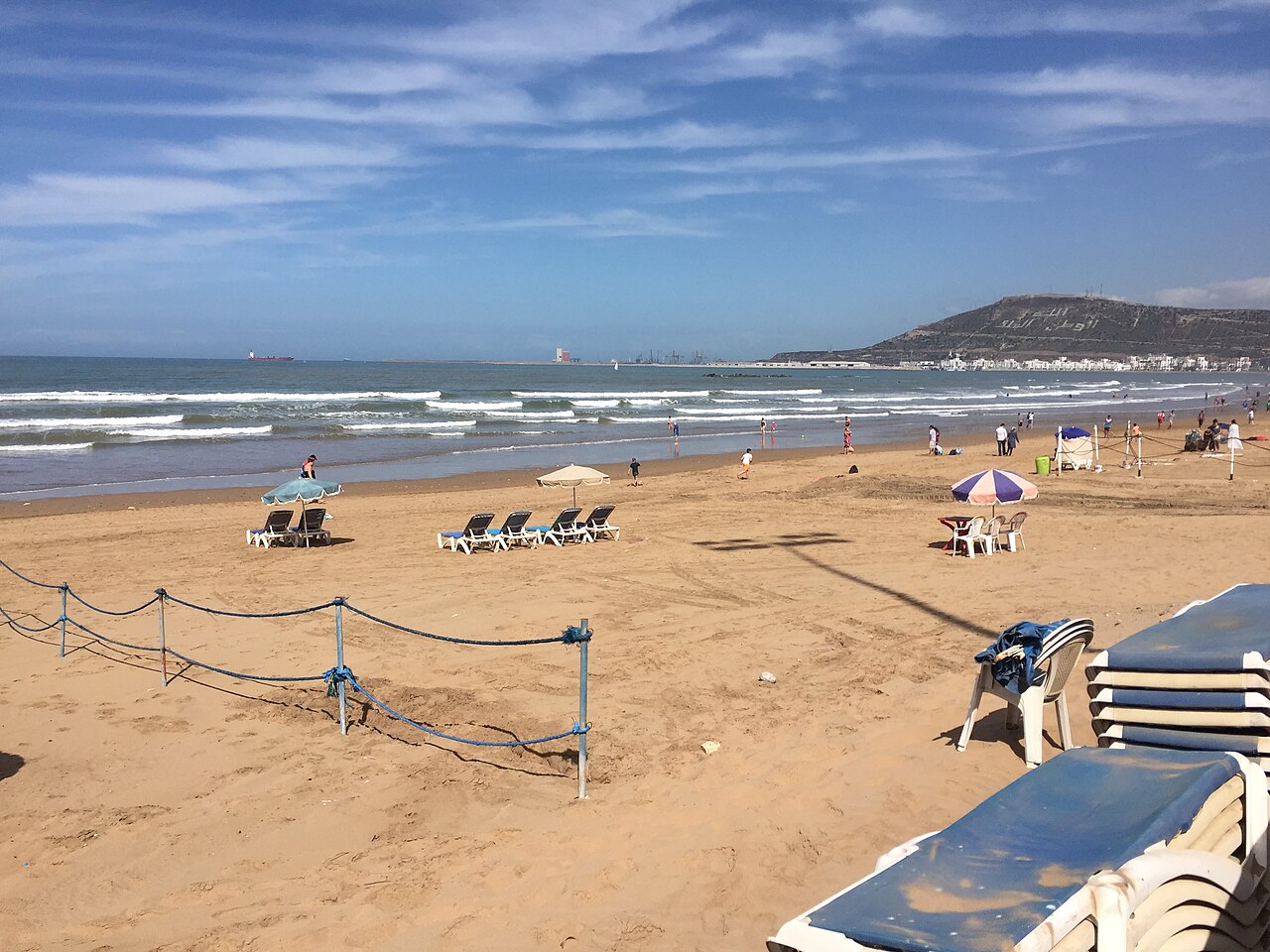
Taghazout fits into about a kilometre of coast, and yet where you sleep decides which wave you surf in the morning. The village, Anchor Point to the north and Tamraght to the south sit ten minutes apart by car and worlds apart in level. Add the month you pick and a steep lane to climb with a board under your arm, and booking a room becomes the first technical decision of the trip.
See places to stay in Taghazout
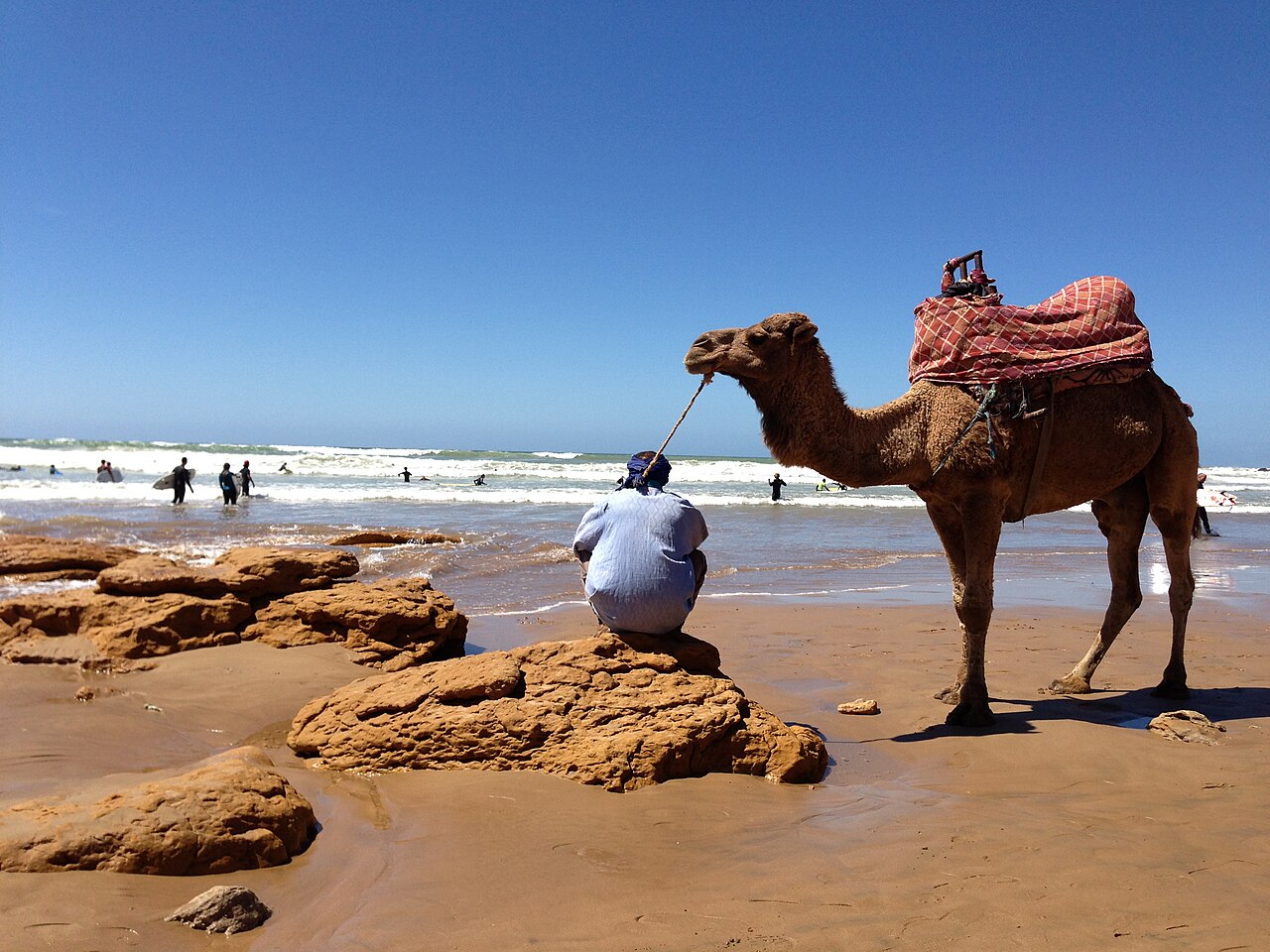
The village: everything walkable, everything uphill
Staying in the village means walking out with your board before you have had coffee. Panoramas, Hash Point and Croco are minutes away, and the schools and rental shops sit on the same streets. When swell arrives you are in the water before the breeze picks up, which is half the job done.
The catch is the gradient. Taghazout is built on a slope and most of it is reached by outdoor staircases with uneven steps. “Two minutes from the beach” tells you nothing about the climb, and with a suitcase and two boards you will make it three times a day.
Then the noise. Parking down near the seafront goes early and the terraces stay open late. If you sleep lightly, ask for a room facing the courtyard, even though the pretty photo in the listing is always the one shot from the balcony.
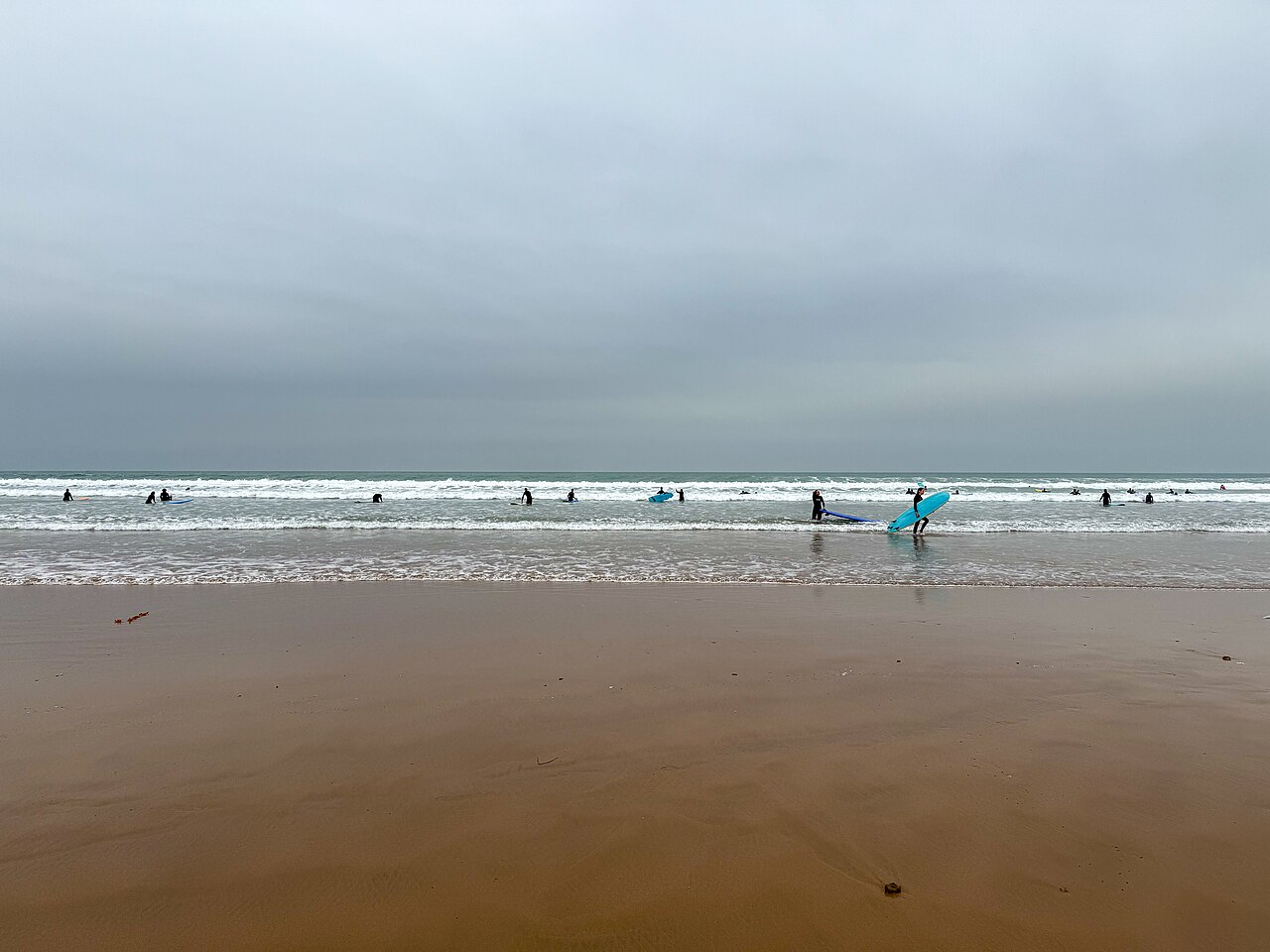
North to Anchor Point: for people who came for the swell
Anchor Point is the wave the region is known for: a long right that only shows up with swell, and no place to learn. When it turns on, everybody is out there, and getting up early changes your wave count more than anything else you control.
The places along the north road are built for that crowd, surf first and sightsee later. They are bigger, and many look straight down onto the point, which is the fastest way to decide whether it is worth putting on a wetsuit. You will want a car or a bike, though, because there is no shop downstairs for bread. Check which way the terrace faces too: the west-facing ones are unusable once the afternoon wind gets up.
Tamraght and Aourir: cheaper, calmer, a short hop south
A few kilometres down the coast, Tamraght and Aourir rent apartments and houses for noticeably less, with Devil's Rock and Banana Point within reach. This is where the long stays and the families end up: more shops, fewer people in August, and Agadir close enough for the airport run.
Life reads differently there as well, a Moroccan village rather than a surf camp, and neither the coffee nor the taxi costs what it does on the main street in Taghazout. The trade-off is the national road running through both villages, lorries from first light, and a walk to the water that is longer than the listing suggests.
The month matters more than the street
Season changes more than the weather. It changes the price, what is still available, and the level the ocean expects of you. The same flat is a different rental in November and in May.
- October to March is swell season: the serious points fire and the well-placed rentals go weeks ahead.
- April to June brings smaller waves, an easier time to learn, and the best window for talking a price down.
- July and August: flat days, real heat and Moroccan family holidays. Good for swimming, thin for surfing.
The water stays cool all year, which no brochure mentions, and the sea mist can hang about until mid-morning. You can come out shivering in October. Beyond the forecast, Moroccan school holidays and the big feasts fill the coast overnight, so if your week lands on one, book early whatever the charts say.
What to ask before you send a deposit
Listings all look alike, and what separates them is the stuff nobody photographs. Start with an outdoor tap: without one in the yard you end up rinsing neoprene in the shower, and by day three the flat smells like a wetsuit.
Then ask where boards live. A narrow corridor or a spiral staircase turns a longboard into a daily chore. The rest is what salt air eats: seized hinges, terrace locks that no longer turn, and in the older village houses a winter damp you feel in the sheets. Hot water usually runs off a gas bottle, so ask who swaps it.
- An outdoor tap or shower for wetsuits and boards.
- Which floor, how many stairs, and the near-total absence of lifts.
- Parking, especially if you are sleeping inside the village.
- What the connection is actually like, if you work between sessions.
- Walking minutes to the peak you want, not to “the beach”.
Monthly rates are where the money is
Plenty of surfers stay a month, or three. At that length nearly every owner will talk about price, particularly outside swell season: two solid months beat three scattered weekends and a key that keeps changing hands.
Ask for the monthly rate in your first message, and ask what it covers, because water, electricity, gas and internet are not always in there. Get the deposit and the end-of-stay cleaning in writing. Then book short and extend: a week on the ground tells you whether the neighbour's building work starts at seven, and an owner would rather keep a good tenant than go looking for another.
Do I need a car in Taghazout?
Not if you are sleeping in the village and surfing the nearby peaks; it is all walkable and shared taxis run down to Agadir. A car earns its keep the moment you want to chase swell along the coast, from Tamri to Imsouane.
Can I learn to surf here from scratch?
Yes, and that is what keeps the village fed all year. The beginner waves are mostly south, around Banana and Crocodile, which is where the schools take people. Anchor Point is not a learning wave, however good it looks from the road.
What wetsuit should I bring?
A 3/2 mm covers most of the year, and plenty of people switch to a 4/3 in midwinter with the water around 17 or 18 degrees. The real problem is drying: two sessions a day in a damp suit and the trip stops being fun.
Taghazout or Tamraght?
Taghazout if you want everything on foot and the noise of the village; Tamraght or Aourir if you want quiet and more space for the same money. For a long stay, or with children, south wins nearly every time.
How far ahead should I book?
For swell season, October to March, as early as you can: the well-placed rentals go weeks out and the last-minute leftovers are rarely what you wanted. The rest of the year, arrive on a short booking and negotiate once you are there.